
iptv augmented content features
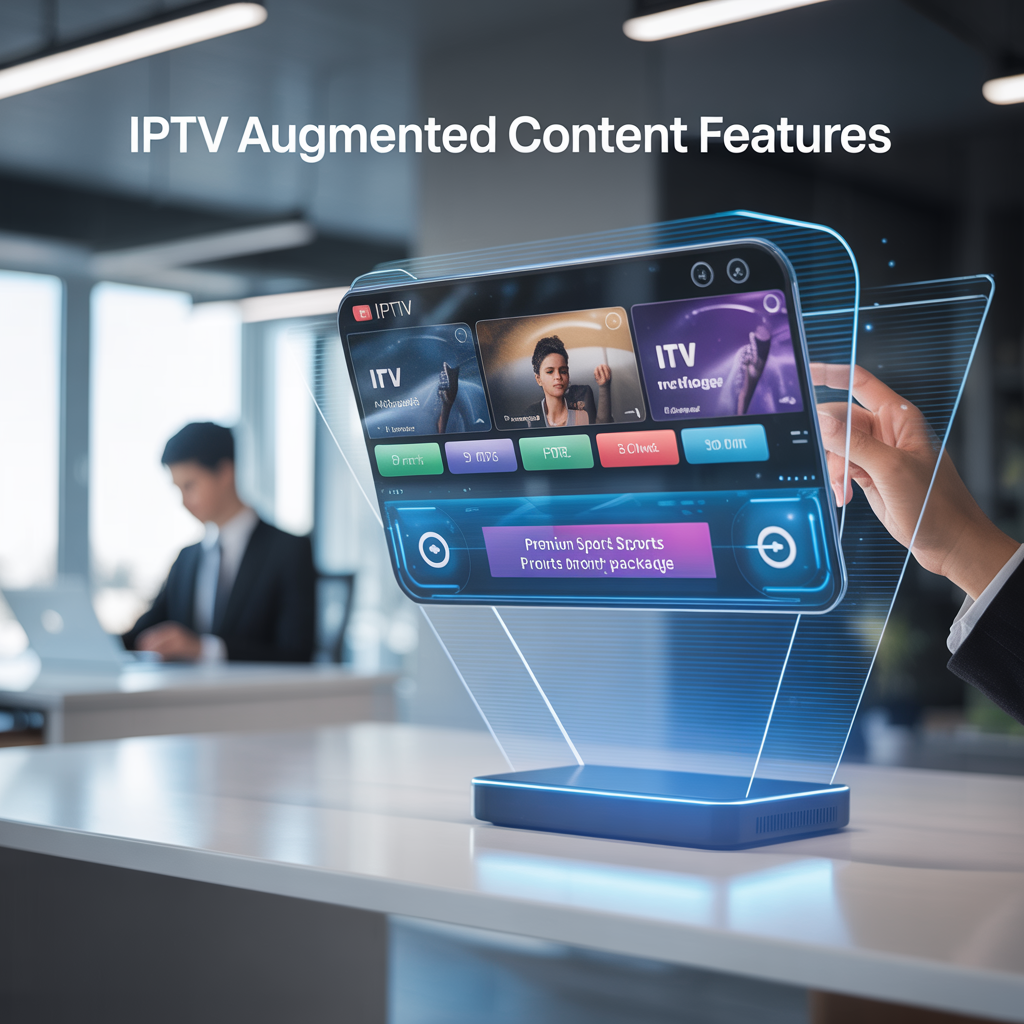
IPTV Augmented Content Features — The Future of Interactive Viewing
Over the last decade, Internet Protocol Television (IPTV) has grown from being a niche option for tech-savvy viewers to becoming a mainstream way of watching TV. For many people, it offers a level of convenience, flexibility, and customization that traditional cable or satellite television simply cannot match. But now, IPTV is evolving even further, thanks to augmented content features — tools and innovations that layer extra functionality, interactivity, and intelligence over the standard video stream.
If IPTV was already disrupting how we watch TV, augmented content is set to redefine what “watching TV” even means. This isn’t just about streaming more channels in higher quality — it’s about enhancing the experience in ways that feel more personal, engaging, and interactive.
What do we mean by “augmented content” in IPTV?
“Augmented content” describes any additional information, UI, interaction, or intelligence that is layered on top of the primary video stream. Think of it as a digital overlay that makes the program smarter: interactive metadata, clickable overlays, synchronized second-screen experiences, live data feeds, context-aware recommendations, and even simple in-video commerce.
Unlike basic on-screen menus or closed captions, augmented content is tightly synchronized with the video timeline and often personalized for the viewer. It can be passive (displaying extra facts) or interactive (letting the viewer act, buy, vote, or control the story).
Core technologies that enable augmented IPTV
- Timed metadata — small messages tied to a precise playback timestamp that tell the player when to show overlays, when to trigger events, or when to swap assets.
- Automatic Content Recognition (ACR) — fingerprinting or watermarking that identifies what’s playing so apps can surface relevant overlays, ads, or companion content in real time.
- Web overlays and HTML5 — HTML/CSS/JS layers rendered by the smart TV or STB (set-top box) that give interactive UI without interrupting the video decoder.
- Second-screen synchronization — protocols that keep a phone or tablet in sync with the TV playback so the companion app shows matching content (stats, polls, extra angles).
- Edge and cloud services — low-latency backends for personalization, ad insertion, and analytics that keep overlays quick and relevant.
- Standards & signaling — SCTE markers, HLS/DASH events, or custom APIs used to signal where and when to inject augmented content.
Practical features viewers already see (and use)
Live stats and game data: while watching a soccer match, on-screen widgets show possession, expected goals, player heatmaps, or real-time substitutions without switching away from the feed. Shoppable TV: see a shirt on a character, tap an overlay and buy it — the overlay shows price, sizes, and a quick checkout flow on your phone or TV remote. Interactive storytelling: live reality shows or interactive movies where viewers vote during the broadcast and the results influence what happens next. Contextual info cards: cast bios, product details, restaurant locations, or background facts that appear when a topic is mentioned in the program.Benefits for viewers and content providers
- Deeper engagement: interactive elements keep viewers active and can extend session length.
- New monetization: shoppable moments, premium interactivity tiers, and targeted overlays create revenue streams beyond pre-roll ads.
- Better personalization: relevance increases when overlays reflect viewer preferences, region, or viewing history.
- Improved measurement: direct interaction signals (clicks, taps, conversions) give publishers clearer ROI on content and ads.
- Seamless multi-device journeys: move from TV to phone to buy, schedule, or share without losing context.
Technical and business challenges
Augmented IPTV is powerful, but not without friction:
- Latency & synchronization: overlays must arrive exactly when needed — a few hundred milliseconds too late and the effect is lost.
- Device fragmentation: many smart TVs, STBs, and streaming devices render HTML/JS differently — creating a consistent experience is hard.
- Privacy & consent: personalization needs data. Providers must navigate consent rules and be transparent about tracking and targeting.
- Standards and interoperability: without common protocols, each vendor invents its own signaling, slowing adoption.
- User experience overload: badly designed overlays can feel spammy and drive viewers away — restraint and relevance matter.
Where augmented content could go next
Over the next few years we can expect several trends to converge:
- Smarter personalization: offline profiling plus real-time signals will let overlays adapt to mood, time of day, and social context.
- Immersive AR layers: for devices that support it, AR could place virtual elements in the viewer’s room that relate to the program (stats hovering near the action, virtual billboards).
- Live interactive commerce: real-time auctions, limited drops, and synchronous buying during events (concert merchandise, flash offers in sports) will grow.
- Programmatic augmented ads: targeted overlays that are inserted and measured programmatically, making them as flexible as web ads today.
- Interconnected ecosystems: tighter links between streaming platforms, social networks, and commerce systems will enable one-click experiences that cross devices and domains.
Design tips for good augmented content
If you’re building augmented features, keep these principles in mind:
- Be relevant: only show overlays that genuinely add value to the current moment.
- Respect attention: avoid large intrusive elements during key scenes; allow viewers to opt out easily.
- Optimize for latency: prefetch assets and use edge logic so overlays render in sync.
- Test across devices: validate experiences on real TVs, mobile devices, and STBs to catch quirks early.
- Make privacy obvious: explain what’s collected and give easy controls to disable personalization or tracking.
What Do We Mean by “Augmented Content” in IPTV?
Short answer: augmented content is everything extra that gets layered on top of a TV stream to make it smarter, interactive, or more useful. Below we unpack what that looks like in practice — no jargon-first, no fluff — just examples you can picture and, if you care to build them, implement.
Start with the basics: overlay vs. augmentation
When people hear “overlay” they picture a small box on the screen — score here, weather there. That’s fine, but augmented content is more than a static overlay. It’s content that knows when it should appear, who it’s for, and what happens when a viewer interacts with it.
Think of the stream as the stage and augmented content as the stage crew: timing cues, props, interactive signs, and a door someone can walk through to buy a shirt or see stats — all coordinated so the show feels seamless.
Concrete examples you’ve probably seen (or will soon)
Live sports stats that update with the action. As the game progresses, on-screen widgets show possession, expected goals, shot charts — synced to exactly the right moment. Shoppable moments. A character’s jacket appears on screen and an unobtrusive card lets you check sizes and buy without leaving the show. Second-screen companion apps. Your phone shows an alternate camera angle, contestant info, or a live poll that moves in lockstep with the TV playback.These are all “augmented” because they add context, utility, or interaction tied to the timeline of the video.
How it actually works (high level)
There are a few building blocks most implementations use:
- Timed metadata: tiny messages attached to precise timestamps tell the player when to show, hide, or change an overlay.
- Automatic Content Recognition (ACR): fingerprinting or watermarking that identifies the current content so companion features can be matched.
- Client-side rendering: HTML/CSS/JS layers on the TV or set-top box that render the interaction without interrupting video decoding.
- Edge/cloud services: backends that decide personalization, serve assets fast, and record interactions for analytics.
In practice that means you prefetch assets, send a small “show this now” message at the right timestamp, and record clicks or conversions back to the server.
Why it matters — beyond novelty
Augmented content isn’t just a gimmick. It changes three real things:
- Engagement: viewers who can interact stick around longer.
- Monetization: direct commerce, micro-offers, or premium interactive layers open new revenue streams.
- Measurement: click-throughs and in-overlay actions give clear signals advertisers and producers crave.
That said, being useful beats being flashy. Audiences quickly tune out overlays that interrupt the story.
Design rules that actually work
If you’re planning augmented features, a short set of ground rules keeps the experience human:
- Be helpful, not pushy: show overlays when they add value to the moment.
- Keep latency tiny: if the overlay arrives late it feels broken — prefetch and edge-serve assets.
- Make consent obvious: explain what data is used for personalization and give viewers simple controls.
- Test on real devices: smart TVs, old set-top boxes, and low-end devices behave differently — try them all.
Common pitfalls
People fall into the same traps over and over:
- Too much information: bombarding the screen during key scenes ruins immersion.
- Fragmented implementations: building different systems per platform that can’t share assets or events.
- Privacy blind spots: personalizing without clear consent or controls.
Fix these and you’re ahead of most projects.
Where this feels headed
We’re likely to see three converging trends: smarter personalization (without being creepy), closer commerce integration (think real-time offers during shows), and better cross-device flows so a TV moment becomes a phone purchase or a social share in two taps.
Augmented content will be useful when it’s invisible — meaning, the tech is complex, but the viewer barely notices anything except that the experience was better.
Why IPTV Is the Perfect Platform for Augmented Content
IPTV already changed how people get video — flexible delivery, on-demand catalogs, and smarter distribution. But there’s a second wave coming: augmented content. When overlays, synchronized metadata, shoppable moments, and companion apps come together, IPTV becomes less like “watching TV” and more like an interactive service that meets viewers where they are.
First — what makes augmented content worth pursuing?
Augmented content adds context and interaction to a video stream: live stats that match a play-by-play, product cards you can tap to buy, companion experiences on your phone, or tiny decision points that shape what you watch next. The goal is simple — make the viewing experience more useful, more engaging, and more measurable.
Hint: it isn’t about slapping ads on screen. It’s about adding value tied to the moment.
Why IPTV is uniquely well-suited
Not every delivery method supports this well. IPTV — delivering TV over IP networks using HLS/DASH or managed multicast/ABR — already offers several technical and product advantages that make augmentation practical and powerful:
1. Precise timing and metadata
IPTV streams commonly support timed metadata (timestamped events, SCTE cues, HLS/DASH events). That lets you say, exactly, “show this overlay at 00:12:34.500.” When overlays must line up with a play or a beat in a show, timing matters — and IPTV gives you the hooks.
2. Two-way and low-latency possibilities
Unlike traditional broadcast, IPTV is built on IP networks where two-way communication is straightforward. That enables quick interactions (voting, shopping, confirmation messages) and, with edge compute and modern CDNs, latency that’s low enough for most live interactions.
3. Device flexibility and HTML layers
Smart TVs, set-top boxes, and apps can render HTML/CSS/JS overlays alongside video. That’s crucial: you don’t need native firmware updates for every new feature — you can iterate overlays like web pages and deploy faster.
4. Rich personalization
IPTV platforms already connect users, sessions, and devices. That identity lets you personalize overlays per household or profile rather than a one-size-fits-all broadcast. Personalization increases utility — and conversion.
5. Easier measurement and attribution
Clicks, taps, conversions — IPTV workflows can capture those actions server-side, tying them to a stream, show, and specific overlay. This direct feedback loop is gold for product and revenue teams.
Real-world use cases that make sense on IPTV
- Sports analytics: live, synced overlays showing possession, player speed, or expected goals without cutting to a stats channel.
- Shoppable entertainment: buy the jacket the lead actor is wearing, with inventory and checkout handled through a companion app or TV remote.
- Interactive news: click through data visualizations or open sidebars with deeper reporting during a live segment.
- Education and training: synchronized quizzes, chapter notes, or extra reading that appears at the precise moment it’s relevant.
- Social & live voting: real-time polls during live shows where the results can shape the next segment.
Business upside — beyond a nicer UI
Augmentation helps both sides of the ecosystem:
- For viewers: faster access to info, less friction to act (buy, share, learn), and an experience tailored to their attention.
- For providers: new revenue streams (shoppable moments, premium interactive tiers), richer ad products, and clearer ROI via interaction data.
In short: augmented content turns passive metrics (hours watched) into active signals (clicks, conversions, repeat buys).
Common challenges — and practical fixes
Augmented content sounds great until viewers experience lag, spammy overlays, or privacy creep. These are avoidable.
- Latency & sync: mitigate with prefetching, edge caches, and using precise timed-metadata rather than ad-hoc triggers.
- Device fragmentation: target a baseline of capabilities (HTML5, basic JS) and progressively enhance for higher-end devices.
- User experience overload: prioritize relevance — one small non-intrusive card is better than five competing panels.
- Privacy: be explicit about data use; offer easy opt-outs and explain benefits of personalization plainly.
Design rules that actually work
- Context first: show overlays only when they add real value to the moment.
- Fail gracefully: if metadata or assets don’t load, the stream should continue without interruption.
- Respect attention: let viewers dismiss overlays quickly and remember their preference.
- Measure everything: log impressions, interactions, and conversions so you can iterate on what actually works.
A short implementation checklist
If you want to prototype a simple augmented feature, start here:
- Define the event: when should the overlay appear (timestamp, SCTE cue, or ACR match)?
- Design the overlay: keep it small, actionable, and dismissible.
- Prepare assets: bundle images/JSON for prefetching at stream start or earlier.
- Choose delivery: timed HLS/DASH events or a small websocket/REST signal for live events.
- Instrument: capture showId, timestamp, userId (if allowed), and action events for analytics.
Final thought
IPTV isn’t perfect, but it gives you the hooks you need — timing, two-way comms, web-style rendering, and identity. That combination turns augmented content from a novelty into a practical product lever: better engagement, clearer monetization, and experiences that actually respect the viewer’s attention.
Build carefully, measure relentlessly, and you’ll find that the best augmented experiences are the ones viewers barely notice — until they try it and wonder how they ever watched TV without it.
Key IPTV Augmented Content Features
Augmented content is where IPTV stops being just “another way to get channels” and starts behaving like a living, interactive medium. Below are the practical features that power that change — explained in plain language, with examples and implementation notes you can actually use.
1. Timed metadata (the glue)
Timed metadata is the single most important building block. These are tiny messages tied to exact moments in the stream — “show overlay,” “switch camera,” “play poll.” Because they’re timestamped, overlays line up with the picture rather than guessing.
Why it matters: exact sync, low cognitive friction, reliable triggers for commerce or interaction.Implementation tip: prefer HLS/DASH events or SCTE-35 cues when possible. Use client-side prefetching to remove visible delay.
2. Automatic Content Recognition (ACR)
ACR identifies what’s playing by fingerprinting audio/video or reading watermarks. It lets companion apps or platforms surface related content even when you don’t have metadata baked into the stream.
Use case: a mobile app recognizes a live scene and shows player stats, product info, or alternate camera feeds.ACR is great for legacy content or syndicated feeds where you can’t insert cues directly.
3. HTML/CSS overlays and web-rendered UI
Modern smart TVs and set-top boxes render web content. That means overlays can be built like small web apps — flexible, updatable, and testable without firmware changes.
Practical upside: iterate quickly, A/B test creative, and reuse web components across platforms.Design for lowest-common-denominator devices first; progressively enhance for higher-end sets.
4. Second-screen synchronization
Phones and tablets sync to the TV so companion experiences (polls, alternate angles, buy flows) stay in lockstep with the broadcast.
Common patterns: websocket-based heartbeat, QR-code pairing, or account-based session linking.For live events, keep drift correction logic — clients will desync without periodic alignment checks.
5. Shoppable moments and commerce overlays
Click or tap an item on screen and you can check sizes, reserve, or buy — without pausing the show. This turns passive attention into immediate commerce opportunities.
Revenue model: affiliate links, direct checkout, limited-time drops during live events.Keep the flow short: TV remote buys should be 2–3 steps max; mobile companions can handle fuller carts.
6. Real-time data and analytics overlays
Sports and live news benefit from overlays that show live stats, graph updates, and data visualizations without cutting away from the action.
Example: live soccer match with heatmaps and xG metrics that update after each attack.Use edge compute to aggregate and push small, efficient updates rather than full high-res images each time.
7. Multi-angle and on-demand camera switching
Viewers choose from camera feeds — alternate angles, referee cams, or slow-motion replays — all without leaving the main player.
How it’s exposed: timed metadata or a simple UI element that swaps the feed in the player.8. Personalization and profile-aware overlays
Because IPTV often knows who’s watching, overlays can be personalized: language, recommended stats, or commerce suggestions tuned to profiles.
Privacy note: only use personal data with explicit consent and provide an obvious opt-out.9. Accessibility & assistive overlays
Augmented content isn’t just commerce and games. It improves accessibility: sign language overlays, real-time captions with extra context, or audio descriptions with selectable detail levels.
Impact: broader reach and better UX for viewers who need it.10. Measurement, attribution & analytics
One of the most practical features: tracking interactions (impressions, clicks, conversions) and tying them back to specific timed metadata. That feedback loop makes it possible to optimize monetization and UX quickly.
Implementation: log events with showId, cueTimestamp, deviceId (hashed), and actionType.Design rules that keep viewers happy
- Be relevant — show overlays only when they add value.
- Keep interactions short — especially for remote-driven flows.
- Prefetch assets — so overlays appear instantly.
- Let viewers dismiss and remember preferences.
- Be transparent about data use and provide controls.
Quick implementation checklist
- Choose your signaling: SCTE/HLS events, websocket messages, or ACR.
- Define asset lifecycles: prefetch windows, TTLs, and cache rules.
- Provide fallback UI for devices that don’t support web overlays.
- Instrument every event for analytics and tie it back to content/time.
- Run device tests on cheap STBs and older smart TVs — they’ll surprise you.
How These Features Work Behind the Scenes
You see a tidy overlay or a live stat during a match and it feels instant. But there’s a fair bit of plumbing under the surface to make that happen reliably. This post walks through the main pieces — how they connect, what usually breaks, and practical fixes you can use if you’re building or evaluating an augmented IPTV setup.
Big picture: the event-driven pipeline
Think of augmented content as an event-driven pipeline. At the left you have sources (live cameras, VOD files, editorial teams). In the middle you have signaling and asset delivery (timed metadata, APIs, CDNs). At the right you have the client (TV app, set-top box, mobile companion) which renders overlays and captures interactions. Everything is choreographed by timestamps and lightweight messages.
Quick summary: source → signal → delivery → render → analytics.Timed metadata — the glue that keeps things in sync
Timed metadata are compact messages attached to a playback timeline. They say things like “show card X at 00:12:34.500” or “switch camera to feed B at 00:45:10.” Common carriers are HLS/DASH events, SCTE-35 cues (for ad breaks), or custom in-band/out-of-band APIs for managed IPTV systems.
How it’s delivered
For on-demand video, metadata can be baked into manifests. For live events, it’s often injected by the playout system or signaled via a low-latency channel (websocket, low-latency API). The client listens for these messages and acts when the playback head reaches the timestamp.
Practical tip
Always prefetch the overlay assets (images, JSON) ahead of the scheduled show time. That removes visible delay when the cue fires.
Automatic Content Recognition (ACR)
ACR recognizes content by matching audio or video fingerprints or by reading watermarks embedded in the stream. It’s useful when you can’t or don’t want to modify the source stream with cues.
Where it sits
ACR usually runs on the client or in a companion app. The client sends a short fingerprint to a server, which responds with a match ID and timings. That match translates into overlays or secondary actions.
Trade-offs
ACR is flexible but adds latency for matching and depends on the quality of the fingerprint database. For strict sub-second sync, timed metadata is usually more reliable.
Client rendering: HTML overlays, native widgets, or hybrid
Rendering overlays can be done in three ways:
- Native UI: built into the TV app code — fastest but requires updates per platform.
- Web overlays: HTML/CSS/JS rendered by a web view — flexible and easy to update.
- Hybrid: native shell with web components for interaction — a compromise for performance and speed of iteration.
Most modern projects use web overlays for speed of deployment, but they must be optimized for lower-powered STBs and old smart TVs.
Rendering gotchas
- Don’t reflow the whole page when a tiny card appears — use composited layers.
- Limit animations and heavy scripts on cheap devices.
- Have a fallback text-only UI for devices that can’t run full overlays.
Synchronization strategies (keeping TV and phone in step)
Second-screen sync is common. Two patterns work well:
- Heartbeat alignment: the companion app periodically pings the server for the master playback position and corrects drift.
- Event anchoring: both devices subscribe to the same timed metadata stream; clients use local clocks to schedule renders.
Use both for robustness: heartbeat fixes long-term drift; event anchoring handles immediate, per-cue timing.
Edge services and CDNs — why they matter
When overlays are interactive or commerce-driven, latency kills conversions. Serving JSON, images, and small JavaScript files from edge locations cuts round-trip time dramatically. Edge logic can also make quick personalization decisions without hitting a central origin.
Pro tip: place personalization decisioning in edge compute if possible, but keep sensitive lookups (billing, profiles) behind secure origins.
Data, analytics, and attribution
Collecting interaction data is how you know if augmented features work. Capture minimal but useful fields: showId, cueId/timestamp, deviceType, anonymized userId (if consented), and action type. Send events in small batches and retry on failure.
Attribution challenges
Tying a TV overlay click to a purchase across devices requires a shared identifier (account login, hashed device binding, or consented email). Design flows that gracefully fallback when the link between TV and phone isn’t available.
Privacy, consent, and data minimization
Good privacy isn’t just compliance — it’s trust. Ask for the minimum data you need, explain why, and let people opt out. For personalization, use on-device inference when you can (reduces data sent off-device) and always present a clear way to turn personalized overlays off.
Simple rule: if the benefit to the viewer isn’t obvious, don’t collect the data.
Testing and observability
Test on real hardware early. Emulators lie. Run these checks:
- Warm and cold start for overlays (do assets load from cache?).
- Drift tests between TV and phone across 30+ minutes of playback.
- Load tests on signaling channels for spikes during promos or halftime.
- Failover tests: what happens if the metadata channel drops mid-event?
Observability: instrument latency from cue emission to client render and alert on regressions.
Common failure modes and fixes
- Late overlays: ensure prefetching and avoid fetching at the cue time; use local cache and CDN.
- Desynced second-screen: use heartbeat + anchor events; apply small time corrections rather than large jumps.
- Device crashes: reduce JS heap usage, avoid heavy animations, and provide a text fallback.
- Privacy complaints: show a short privacy notice and simple toggle in the first-run experience.
Quick implementation checklist
- Pick your signaling: HLS/DASH events, SCTE, websocket, or ACR.
- Design tiny, dismissible overlays that degrade gracefully.
- Prefetch assets and serve them from edge/CDN.
- Instrument every cue and action for analytics.
- Test on low-end devices and across networks (Wi-Fi, cellular).
- Provide a clear privacy control and minimal data collection.
Final note — make it feel invisible
The best augmented content is the kind you barely notice until you use it and think, “Oh, that was useful.” The tech is mostly solved — the hard part is designing around human attention, network reality, and device quirks. Build small, test often, and iterate based on real metrics rather than gut feelings.
Benefits of IPTV Augmented Content for Viewers
Augmented content is reshaping how we watch TV on IPTV platforms. But what does that mean for viewers? Let’s explore the practical advantages viewers get when their TV experience becomes smarter, more interactive, and more personal.
1. More Relevant Information Exactly When You Need It
Instead of flipping channels or searching the internet for details, IPTV augmented content delivers context-rich overlays right on screen. Imagine watching a live soccer match and seeing up-to-the-second stats about player performance, or tuning into a cooking show and instantly viewing recipe ingredients without pausing.
This timely info makes the viewing experience more immersive and useful without interrupting the flow.
2. Interactive Experiences that Engage
Viewers aren’t just passive watchers anymore. With augmented content, they can participate in polls during live shows, choose camera angles during sports events, or explore product details with a tap or click. This turns watching into an active, engaging experience that fits modern expectations.
3. Seamless Shopping Opportunities
Seen a jacket or gadget you like on a show? Shoppable overlays let viewers explore items on screen and even buy them through their remote or a companion device. This convenience removes friction between interest and purchase, making impulse buying easy and natural.
4. Personalization Tailored to You
IPTV platforms often recognize individual users or households, allowing augmented content to adapt. Whether that’s showing stats for your favorite teams, offering language-specific overlays, or recommending content based on past viewing, personalization makes TV feel less generic and more like it was made just for you.
5. Accessibility Made Smarter
Augmented content also improves accessibility. Real-time captions, sign language overlays, or audio descriptions with selectable detail levels can appear when needed, helping viewers with hearing or vision impairments enjoy TV with fewer barriers.
Accessible design isn’t an afterthought here — it’s baked in to make sure everyone benefits.6. Reduced Frustration with Better Synchronization
Second-screen experiences synced tightly to the main broadcast mean no annoying lag between what you see on TV and what’s happening on your phone or tablet. This smoother connection keeps interactive apps and companion features feeling natural and friction-free.
7. Less Waiting, More Watching
Prefetched assets and timed overlays reduce loading delays. Viewers get near-instant popups or content updates, meaning fewer interruptions and a more fluid viewing experience overall.
8. Clearer Control Over Experience and Data
Good IPTV platforms offer viewers options to dismiss overlays, opt out of personalization, or control what kind of augmented content they want to see. Transparency about data use and easy privacy controls build trust and comfort for users.
Wrapping Up
Augmented content on IPTV isn’t just a tech upgrade — it’s a better way to watch. Viewers get relevant info, engaging interactivity, seamless shopping, thoughtful personalization, and accessibility improvements. When done right, these benefits add up to a viewing experience that’s smarter, smoother, and more enjoyable.
In a world where attention is precious, IPTV augmented content helps viewers get more out of every minute in front of the screen.
Benefits of IPTV Augmented Content for Content Providers and Advertisers
Augmented content on IPTV platforms is more than just a flashy upgrade — it opens up practical new ways for content providers and advertisers to connect with audiences, boost engagement, and grow revenue. Here’s a straightforward look at what it really means for those creating and monetizing content.
1. Enhanced Viewer Engagement
By layering interactive elements on top of video streams, content providers can keep viewers involved rather than passive. Interactive polls, real-time stats, and selectable camera angles invite viewers to participate, increasing time spent watching and overall satisfaction.
2. New Revenue Streams through Shoppable Content
Augmented content enables on-screen product placements that viewers can interact with directly. This turns traditional product placement into immediate commerce opportunities, allowing advertisers to measure real ROI and providers to share in affiliate or direct sales.
For advertisers, this means shifting from broad impressions to measurable actions tied to specific moments in a program.
3. Richer and More Precise Analytics
Unlike traditional TV metrics that mainly rely on viewership numbers, augmented IPTV content tracks viewer interactions — clicks, taps, and conversions — with timestamp precision. This granularity helps providers and advertisers understand what resonates, enabling smarter content planning and ad targeting.
4. Personalization at Scale
IPTV platforms know who’s watching and can tailor augmented overlays accordingly. Advertisers can target products or messages based on demographics, preferences, or past behavior, increasing relevance and effectiveness without interrupting the viewing experience.
5. Reduced Ad Fatigue and Higher Viewer Satisfaction
Instead of bombarding viewers with interruptive commercials, augmented content integrates ads naturally into the experience. This reduces annoyance and makes viewers more receptive, which ultimately benefits both advertisers and providers by improving brand perception and retention.
6. Flexible Monetization Models
Providers can experiment with pay-per-interaction, premium interactive tiers, sponsored content, or hybrid ad models that combine traditional commercials with embedded product links. This flexibility helps adapt revenue streams to evolving market demands.
7. Faster Time-to-Market and Content Iteration
Using web-based overlays and timed metadata means providers don’t have to wait for costly firmware updates or platform approvals to launch new interactive features. They can test, tweak, and roll out innovations quickly, staying ahead of competitors.
8. Improved Brand Safety and Compliance
Augmented content allows advertisers to precisely control when and how their messaging appears, reducing risks associated with program context or audience mismatches. Providers can also ensure overlays comply with regional regulations and viewer preferences.
Wrapping Up
For content providers and advertisers, IPTV augmented content isn’t just a trend — it’s a strategic advantage. It unlocks deeper engagement, new revenue channels, richer data, and the agility to adapt in a fast-changing media landscape. When done thoughtfully, it benefits everyone in the ecosystem: providers, advertisers, and viewers alike.
Real-World Examples of IPTV Augmented Content
Augmented content is no longer just a futuristic idea — it’s happening right now in IPTV platforms around the world. Let’s take a look at some concrete examples where these features have been put into practice and are changing how viewers engage with TV.
1. Sports Broadcasts with Interactive Stats and Multi-Angle Feeds
Sports fans have been among the first to benefit from augmented content on IPTV. Platforms now deliver real-time stats overlays, heatmaps, and expected-goal (xG) visualizations that update as the game unfolds. Viewers can switch camera angles with their remote or a companion app, choosing views like player cams, referee cams, or slow-motion replays.
Example: A major European soccer league’s IPTV service offers a “Match Center” overlay that shows live player stats and allows fans to watch replays from multiple angles without leaving the main stream.2. Shoppable Content in Lifestyle and Shopping Channels
Shopping channels and lifestyle shows have embraced interactive overlays that let viewers instantly get details on products appearing on screen. Without pausing the show, viewers can browse color options, prices, and buy directly via the remote or mobile companion.
Example: A home shopping IPTV network in the US launched a “Tap to Buy” feature, turning live product demos into seamless commerce experiences and significantly boosting conversion rates.3. Interactive Quizzes and Polls During Entertainment Shows
Augmented content enables live interaction during quiz shows and reality TV, where viewers vote on outcomes or answer questions in real time. This fosters a sense of community and makes watching a shared event more engaging.
Example: An Asian IPTV provider runs a weekly talent competition where viewers use their smartphones synced with the broadcast to vote live, with results reflected immediately on the main screen.4. Accessibility Enhancements for Broad Audiences
Some IPTV services use augmented overlays to improve accessibility. These include sign language windows, on-demand audio descriptions, and customizable caption overlays that show extra context for dialogue or sounds.
Example: A Scandinavian IPTV platform offers optional sign language overlays for children’s programming, making content more inclusive for hearing-impaired viewers.5. Personalized Recommendations and Content Highlights
By analyzing viewer profiles and behavior, IPTV systems surface personalized content highlights and recommendations through overlays. These may include trailers for upcoming shows, reminders for favorite programs, or tailored advertisements.
Example: A North American IPTV provider uses profile-aware overlays to suggest related documentaries while a user watches a nature series, increasing content discovery without interrupting the experience.6. Emergency Alerts and Real-Time Updates
Some broadcasters leverage augmented content to deliver timely emergency alerts and important local updates as subtle but visible overlays, ensuring critical information reaches viewers without disrupting programming entirely.
Example: During severe weather events, a regional IPTV service displays live alert banners and safe-route maps as overlays, helping keep communities informed in real time.Wrapping Up
These real-world examples show how IPTV augmented content is actively reshaping television into a more interactive, personalized, and valuable experience for viewers and providers alike. As technology continues to advance and adoption grows, expect these features to become a standard part of watching TV.
If you want, I can help create case studies, developer guides, or user experience outlines based on these examples.
Challenges and Considerations in IPTV Augmented Content
Augmented content on IPTV offers exciting opportunities, but it’s not without hurdles. Here’s a straightforward look at the challenges content providers, advertisers, and platform developers face — along with some practical considerations to keep in mind.
1. Synchronization and Latency Issues
One of the biggest technical challenges is keeping overlays perfectly in sync with the video stream. Even a slight delay can cause frustrating mismatches, breaking immersion and confusing viewers. Network jitter, variable device performance, and differing streaming protocols all complicate precise timing.
Content providers need to invest in low-latency signaling, timed metadata standards, and robust buffering strategies to minimize these issues.
2. Device Diversity and Performance Constraints
IPTV is accessed on a huge variety of devices: smart TVs, set-top boxes, smartphones, tablets, and sometimes even gaming consoles. Each device has different hardware capabilities, screen sizes, and software environments.
Augmented content must be optimized to run smoothly on lower-end hardware without draining excessive resources, while still delivering a compelling experience on high-end devices.
3. User Experience Complexity
Adding interactive layers risks overwhelming or distracting viewers if not done carefully. There’s a delicate balance between offering helpful information and cluttering the screen.
Providers should prioritize simple, dismissible overlays that respect viewer control and preferences. Testing with real users is critical to get this right.
4. Privacy and Data Protection
Personalized augmented content requires collecting and processing viewer data. This raises concerns about privacy, data security, and regulatory compliance (e.g., GDPR, CCPA).
Transparency is key: viewers need clear information on what data is collected, how it’s used, and how to opt out. Providers should practice data minimization and use anonymization techniques wherever possible.
Important: Neglecting privacy can erode trust and lead to costly legal problems.5. Integration with Legacy Systems
Many IPTV operators run legacy infrastructure that wasn’t designed for augmented content. Integrating new signaling methods, metadata injection, or overlay frameworks can be complicated and costly.
Phased rollouts and hybrid approaches often work best, starting with simple features before moving to full interactivity.
6. Content Rights and Licensing
Augmented content sometimes involves third-party data (like stats, ads, or product info) that requires licensing or special agreements. Rights management can be complex, especially across regions.
Providers should ensure clear contracts and consider geo-fencing overlays to avoid legal pitfalls.
7. Cost and Resource Investment
Developing, deploying, and maintaining augmented content features requires investment in technology, content production, and analytics. For smaller providers, these costs might be a barrier.
However, partnering with specialized vendors or leveraging modular platforms can reduce upfront expense.
Final Thoughts
Augmented content in IPTV promises a richer, more engaging experience — but it’s not plug-and-play. Success demands careful planning around timing, user experience, privacy, and technical integration.
By facing these challenges head-on and prioritizing the viewer’s needs, providers can unlock the full potential of interactive TV without losing sight of practical realities.
The Future of IPTV Augmented Content
IPTV has already changed how we watch TV, but augmented content is poised to take things to a whole new level. As technology advances and viewer expectations evolve, the way we interact with television will become more immersive, personalized, and intelligent than ever before.
Smarter Personalization Through AI and Machine Learning
Tomorrow’s IPTV platforms will harness AI to tailor augmented content in real time. Imagine overlays that adapt not just based on your profile, but also on your mood, current context, and even social cues from your friends watching the same show.
This means content recommendations, interactive features, and ads that feel less like interruptions and more like natural extensions of your viewing experience.
Deeper Integration with Smart Home and IoT Devices
Augmented content won’t just live on the screen. It will connect with smart speakers, lighting, and other home devices to create a multi-sensory experience. For example, during a thriller, your lights might dim automatically, or a cooking show could sync with your smart kitchen appliances.
Immersive Augmented Reality (AR) and Virtual Reality (VR) Experiences
While IPTV is primarily screen-based, AR and VR technologies will blend with augmented content to offer entirely new ways to engage. Picture watching a live sports event where you can “step into” a virtual stadium from your living room, interacting with stats and replays as if you were really there.
More Seamless Multi-Device and Second-Screen Experiences
Second-screen apps will get smarter at syncing with IPTV streams, offering complementary info, chat features, or shopping without lag or confusion. Voice control and gesture recognition will reduce the friction of interacting with content across devices.
Content Creator Empowerment and Customization
Creators will have more tools to build interactive overlays, choose how their content is augmented, and directly engage with their audiences. This could democratize innovation, letting niche shows and independent producers add personalized experiences without huge budgets.
Privacy-First Augmented Content
With growing awareness of data privacy, future IPTV augmented content will prioritize giving viewers control over their data. On-device processing, transparent consent flows, and clear opt-out options will become standard, building trust and improving adoption.
Challenges to Overcome
Of course, these exciting advances come with challenges: technical complexity, ensuring accessibility, preventing information overload, and balancing monetization with user experience. But the industry is actively exploring solutions to keep the future viewer-friendly.
Looking Ahead
The future of IPTV augmented content is about blending technology and storytelling to create experiences that feel alive, responsive, and uniquely yours. As the line between broadcaster and viewer blurs, what we call “watching TV” will become an active, shared adventure.
It’s a thrilling time for viewers, providers, and advertisers alike — and we’re just getting started.
Final Thoughts on IPTV Augmented Content
Augmented content is rapidly shaping the future of IPTV and how we engage with television. Here’s a simple, no-nonsense reflection on what this means for viewers, providers, and the industry as a whole.
A New Way to Experience TV
Augmented content takes IPTV beyond just streaming channels and shows. It transforms passive viewing into an interactive, personalized experience that can inform, entertain, and engage simultaneously. This shift has the potential to redefine our relationship with television.
Opportunities for Everyone Involved
Viewers benefit from richer information, better accessibility, and seamless interactivity. Content providers gain new tools to deepen engagement and monetize in innovative ways. Advertisers get access to more targeted, measurable campaigns that respect viewer preferences.
Challenges Remain, But They’re Not Insurmountable
Synchronization, privacy, and user experience challenges require attention and careful solutions. But the industry is learning fast, and ongoing advances in technology and design thinking are making augmented content smoother and more trustworthy.
Looking Ahead
The future promises IPTV experiences that are smarter, more immersive, and more tailored to individual viewers than ever before. While we’re only at the beginning of this journey, augmented content is already proving to be a game changer.
Wrapping Up
For anyone interested in the future of television, IPTV augmented content offers exciting possibilities. Whether you’re a viewer curious about what’s next, a provider planning your platform’s evolution, or an advertiser seeking new engagement methods, this is a space worth watching closely.